
Most homeowners only deal with their roof a handful of times in their life — usually when something goes wrong. That means when the questions start coming, they tend to come fast and all at once. How bad is it? Can it be repaired or does it need to come off? How much will this cost? How long will it take?
NJ Roofing answers these questions every day across Essex, Bergen, Union, Hudson, and Morris counties. The seven questions below are the ones we hear most often, from homeowners in Maplewood colonials to property managers in Newark apartment buildings to first-time buyers trying to understand what a home inspection found. The answers here are the same ones we give in person — specific, honest, and NJ-specific where it matters.
This is the question almost every call starts with, and the honest answer is that it depends on two things: the age of the roof and the scope of the damage. A missing shingle on a seven-year-old roof is a repair. A missing shingle on a 24-year-old roof with granule loss across three slopes and soft spots near two valleys is a replacement conversation.
The reason age matters so much is that roofing systems deteriorate holistically, not in isolated patches. Asphalt shingles lose granules, become brittle, and lose adhesive seal integrity at roughly the same rate across the entire surface. Repairing one section of a shingle system that is within five years of the end of its lifespan typically means you will be repairing another section next season, and another the season after that. At a certain point, the cumulative repair cost approaches or exceeds the replacement cost, and you have nothing to show for it but an aging roof with a patchwork history.
The indicators that point toward replacement rather than repair include any of the following:
If none of those apply, a targeted repair is almost always the right call. A good repair on a mid-life roof — replacing damaged shingles, resealing or replacing flashing, addressing a valley leak — can add several years of serviceable life at a fraction of replacement cost.
NJ Roofing provides free written inspections with photos. If a contractor tells you that you need a full replacement without providing a written report with specific findings, get a second opinion. The inspection report is what separates a professional assessment from a sales pitch.
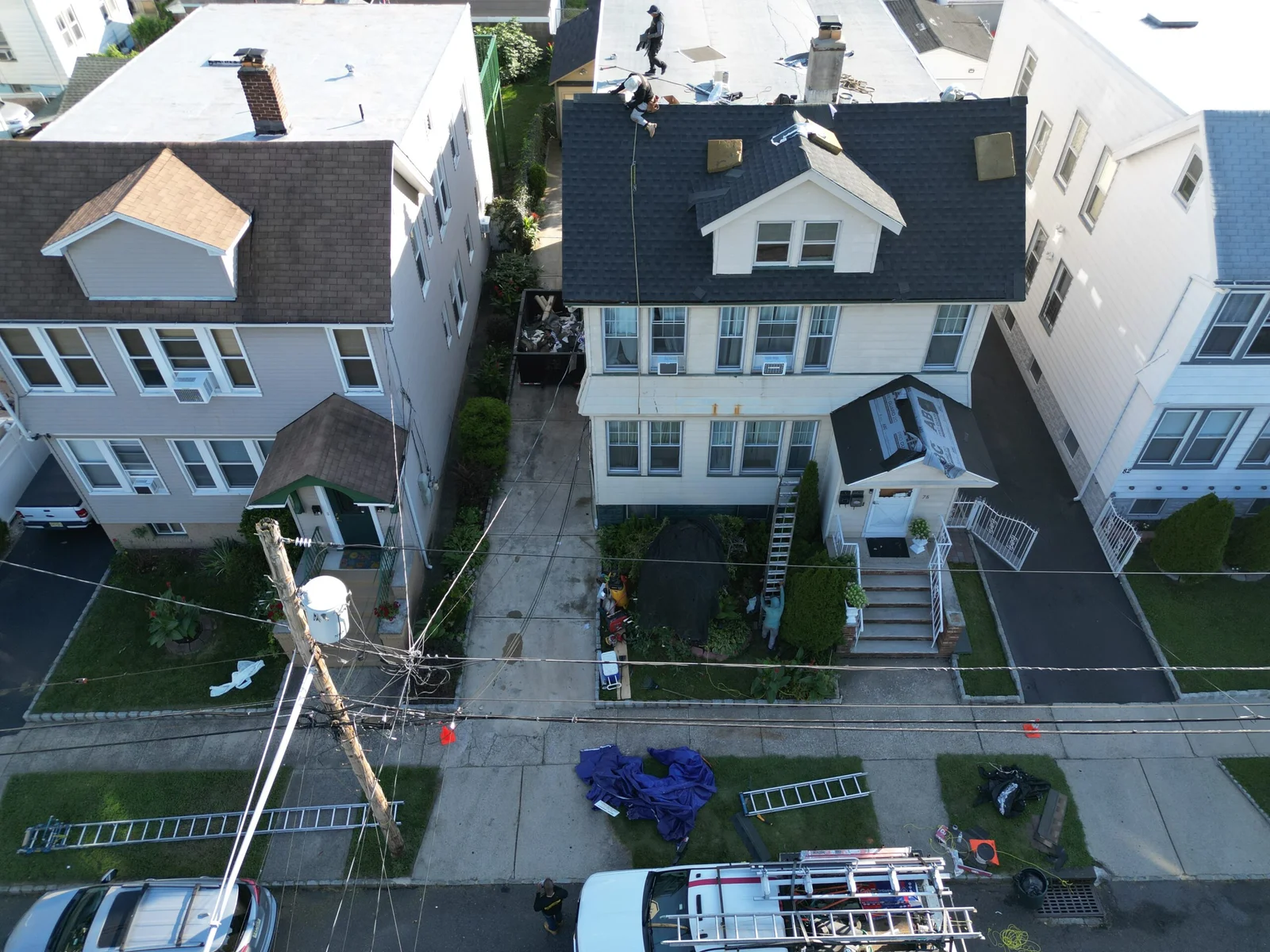
New Jersey's climate is harder on roofing systems than many homeowners realize. The state sits in a transition zone that experiences the full range of weather stresses: freeze-thaw cycles from November through March, sustained summer heat and UV exposure from June through August, nor'easters that combine wind and water loading in ways that test flashing and edge details, and periodic hail that accelerates granule loss. That combination means NJ roofs typically reach the end of their serviceable life earlier than the same material installed in a drier or more moderate climate.
The lifespan ranges below are realistic for New Jersey conditions, assuming proper installation and baseline maintenance:
| Material | NJ Lifespan Range | Notes |
|---|---|---|
| 3-tab asphalt shingles | 15–20 years | Least common in new installs today; thin profile vulnerable to freeze-thaw and wind |
| Architectural asphalt shingles | 22–30 years | Most common residential material in NJ; GAF Timberline and OC Duration are standard |
| Premium architectural (GAF HDZ) | 28–40 years | Heavier weight, better wind rating, qualifies for GAF Golden Pledge warranty |
| Metal roofing (standing seam) | 40–70 years | Excellent for NJ freeze-thaw; higher upfront cost but lowest lifecycle cost |
| Slate (natural) | 75–150+ years | Common on Victorian homes in South Orange, Glen Ridge, Montclair; requires specialist installation |
| EPDM flat roofing | 20–30 years | Standard for commercial flat roofs in NJ; seam quality is the primary longevity factor |
Two factors that significantly affect lifespan regardless of material are attic ventilation and installation quality. A poorly ventilated attic creates heat buildup that accelerates shingle degradation from below. Improper installation — nailing too high, inadequate starter course, incorrect valley flashing — creates failure points that manifest within five to eight years, well before the material's natural end of life.
Before any roofing quote, a thorough contractor should assess your attic ventilation. In NJ's climate, inadequate soffit or ridge ventilation can cut shingle lifespan by 30 to 40 percent. This is a free check during any NJ Roofing inspection.
New Jersey roof replacement costs are meaningfully higher than national averages cited on most roofing websites. The reasons are concrete: NJ labor costs are among the highest in the country, disposal fees for old shingles are substantial, permit costs vary by municipality but add real dollars to every project, and material costs reflect northeast supply chain pricing rather than sunbelt or midwest averages.
The ranges below reflect typical NJ costs as of 2025, based on actual projects completed by NJ Roofing across Essex, Bergen, Union, Hudson, and Morris counties:
| Home Type | Typical NJ Range | What Drives the Variation |
|---|---|---|
| Small ranch or cape cod | $7,500–$12,000 | Simpler roofline, lower pitch, straightforward material takeoff |
| Colonial, bi-level, split-level | $10,000–$18,000 | Two-story pitch, moderate valleys; most common in postwar NJ suburbs |
| Large colonial or Victorian | $15,000–$28,000 | Steep pitch, dormers, complex valleys, larger footprint |
| Premium GAF Golden Pledge system | Add $2,000–$5,000 | Premium shingle tier, full synthetic underlayment, ridge vent system, 50-year warranty |
| Deck repair (if needed) | $75–$150 per sheet | OSB or plywood replacement for rotted or compromised decking found during tearoff |
The largest single source of unexpected cost in a roof replacement is deck condition. When NJ Roofing provides an estimate, we walk the attic and probe the decking before writing a number. Contractors who quote based on measurements alone are not accounting for deck condition, which means their quote is incomplete.
A quote that is dramatically lower than others in the same market is almost never good news. It typically means reduced material grade, no permit being pulled, no workers' compensation insurance, or a crew that will not be accountable when something leaks in 18 months. The cost of a bad installation is always higher than the savings on the original quote.
NJ Roofing provides itemized written estimates with material specs, no lump sums. Use our calculator for a fast starting estimate or call for a free on-site inspection.
Material selection in New Jersey is more constrained than it appears from the outside. Slate and clay tile are heavy enough to require structural assessment before installation on most existing homes. Wood shake is not a viable option in most NJ municipalities due to fire code. Metal is excellent but the upfront cost puts it outside the consideration range for many homeowners who are not planning a 40-year hold. That leaves asphalt-based architectural shingles as the practical choice for the overwhelming majority of NJ residential replacements.
Within the architectural shingle category, the practical decision is about tier:
| Tier | Products | Warranty | Best For |
|---|---|---|---|
| Standard architectural | GAF Timberline CS, OC Classic | 25–30 yr limited | Budget-constrained projects; homes being sold within 10 years |
| Premium architectural | GAF Timberline HDZ, OC Duration | Lifetime limited | Most NJ homeowners planning to stay 10+ years |
| Designer / Golden Pledge tier | GAF Camelot, Woodland, OC Woodcrest | 50-yr Golden Pledge available | Victorian and high-value homes; maximum warranty and aesthetic match |
| Metal (standing seam) | Various; Kynar coating recommended for NJ | Manufacturer 40–50 yr | Long hold periods; coastal or high-wind exposure; flat/low pitch sections |
For NJ homes, the upgrade from standard to premium architectural shingles — roughly $800 to $1,500 on a typical colonial — is consistently worth the cost. The additional weight and wind rating of Timberline HDZ or OC Duration materially affects performance in nor'easter conditions. The improved granule adhesion measurably extends serviceable life. And the warranty tier upgrade that comes with the premium shingles provides real protection rather than nominal coverage.
NJ nor'easters regularly produce wind gusts above 60 mph. Standard architectural shingles are typically rated to 60 mph. GAF Timberline HDZ carries a 130 mph wind warranty. In a coastal or elevated location in NJ, that difference is real. Ask any contractor you are evaluating what the wind warranty is on the specific shingle being proposed.
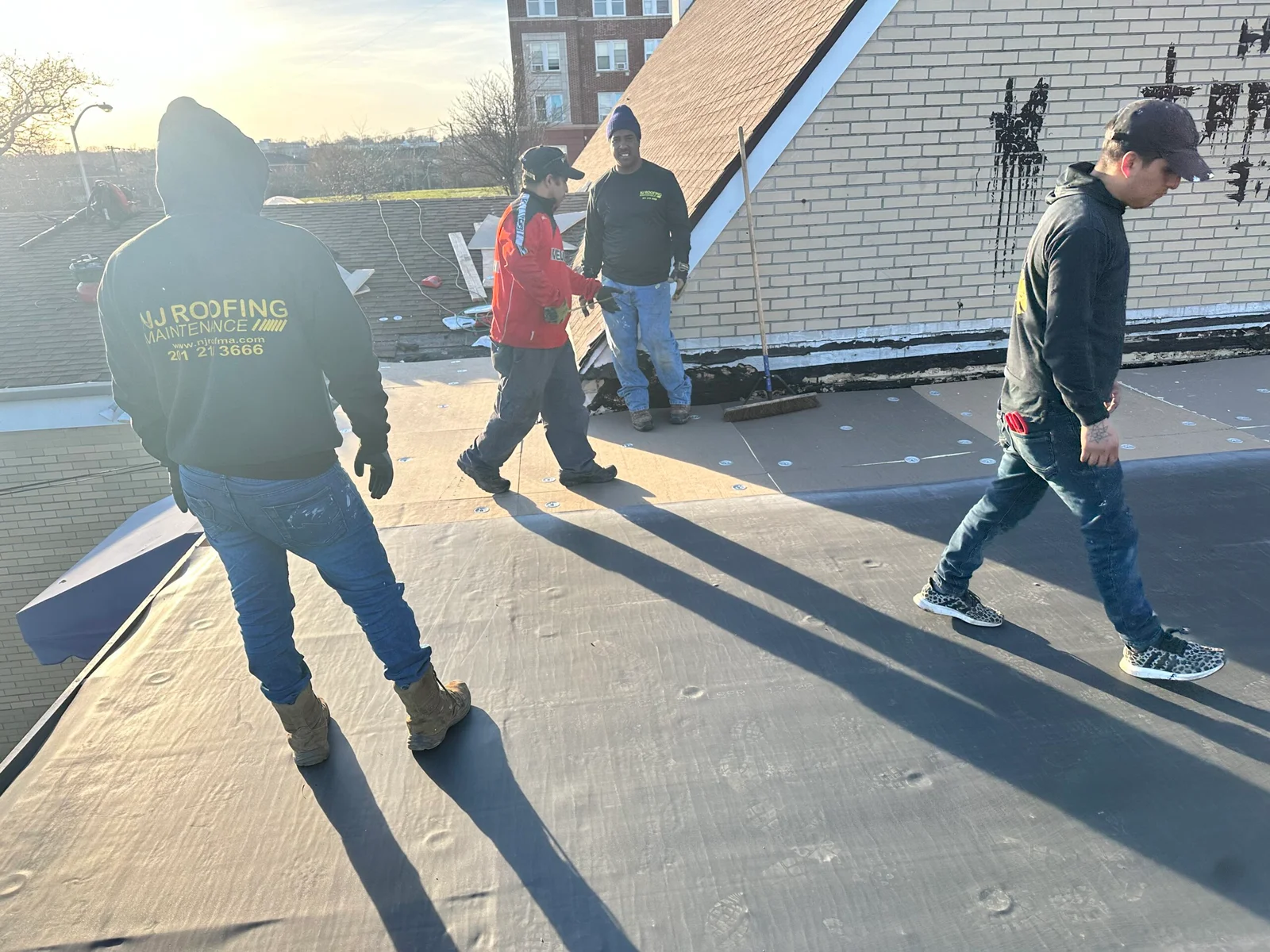
The installation timeline itself is usually the shortest part of the overall project. A standard NJ colonial or ranch — 20 to 30 squares of roofing — with a straightforward roofline will typically be torn off, dried in, and resheathed in a single day, with any remaining detail work, ridge installation, and flashing completed the following morning. Larger homes, steeper pitches, and complex rooflines with multiple dormers or valleys extend that to two full days for the installation itself.
What actually determines the overall timeline from contract signing to finished roof:
Realistically, from contract signing to completed installation, expect two to four weeks for a standard NJ residential replacement in normal conditions. During peak season (late spring through early fall), add one to two weeks to that estimate for scheduling availability.
New Jersey building code allows a second layer of asphalt shingles over an existing first layer on residential structures. Some contractors offer this as a cost-saving option, and the savings are real — eliminating tear-off and disposal typically reduces project cost by $1,000 to $2,500 on an average home.
The problem is structural and practical. The second layer adds 50 to 100 pounds per square (100 square feet) of dead load to the roof structure. More significantly, an overlay installation makes it impossible to inspect or repair the existing decking. Any soft spots, rotted sections, or improperly nailed areas remain in place under the new shingles and will continue to deteriorate.
The consequences of that deferred inspection show up within five to eight years in most cases. The new shingles develop waves and dips where the underlying deck has failed. Nails pull through the decking at compromised points. Leaks begin at flashing transitions because the additional shingle layer height creates gaps the flashing cannot bridge. At that point, the full tear-off that was deferred is now unavoidable — plus the cost of deck repair that would have been visible and addressable the first time.
If the existing roof already has two layers, a third layer is not permitted under NJ building code and no legitimate contractor should offer it. If the existing roof has any visible wave, sag, or soft spots, an overlay is not appropriate regardless of layer count. And if the existing shingles are curled or buckled, the new layer will conform to those irregularities and fail prematurely.
NJ Roofing's standard practice is full tear-off on every replacement. The cost difference is real, but the value of being able to inspect, address, and warranty the entire roofing system from deck to ridge cap is not available any other way. Every GAF Golden Pledge warranty we issue requires full tear-off precisely because GAF cannot warranty a system built over an uninspected substrate.
Roofing warranties come in several tiers that homeowners frequently conflate, and understanding the difference matters significantly for a purchase that is expected to last 25 to 50 years.
| Warranty Type | What It Covers | Backed By |
|---|---|---|
| Contractor workmanship warranty | Labor defects only, typically 1–5 years | The contractor — only valid if they are still in business |
| GAF Standard warranty | Material defects, limited coverage | GAF Corporation — valid regardless of contractor |
| GAF System Plus warranty | Materials + limited labor, 50-year limited | GAF Corporation; available from certified installers |
| GAF Golden Pledge warranty | Materials + labor + tear-off, up to 50 years, transferable | GAF Corporation; available only from Master Elite contractors |
| OC Platinum Protection | Materials + labor, 50-year limited, transferable | Owens Corning; available from Preferred contractors |
The critical distinction is manufacturer backing versus contractor backing. A contractor who offers a "10-year workmanship warranty" with no manufacturer involvement is offering you a warranty that is valid only as long as that contractor is in business, answering phones, and willing to honor it. A manufacturer warranty from GAF or Owens Corning is backed by a corporation that will exist well beyond the contractor's lifespan and is enforceable regardless of which contractor installed the system.
The GAF Golden Pledge is the specific warranty tier that NJ Roofing can offer as a GAF Master Elite contractor. Its significance for NJ homeowners extends beyond the coverage itself: the Golden Pledge is fully transferable at sale, which means it represents a real and documentable asset when listing a home in Essex or Bergen County's active real estate market. A 30-year-old roof with a valid transferable 50-year warranty is a meaningfully different proposition to a home buyer than a 30-year-old roof without one.
Any contractor offering a manufacturer warranty should be able to show you the actual warranty document — not a summary, not a brochure, the registration-eligible warranty with coverage terms — before you sign a contract. NJ Roofing provides the GAF Golden Pledge warranty documentation as part of the project contract package. If a contractor cannot produce the actual warranty document, the warranty may not be real.
Free inspection, written estimate, no sales pressure. NJ Roofing is licensed #13VH09260500, $2M+ insured, and GAF Master Elite certified. We serve all of Essex, Bergen, Union, Hudson, and Morris counties.
Free inspection, written findings, no obligation. NJ Roofing is licensed, insured, and GAF Master Elite certified. Serving Essex, Bergen, Union, Hudson, and Morris counties since 2016.
